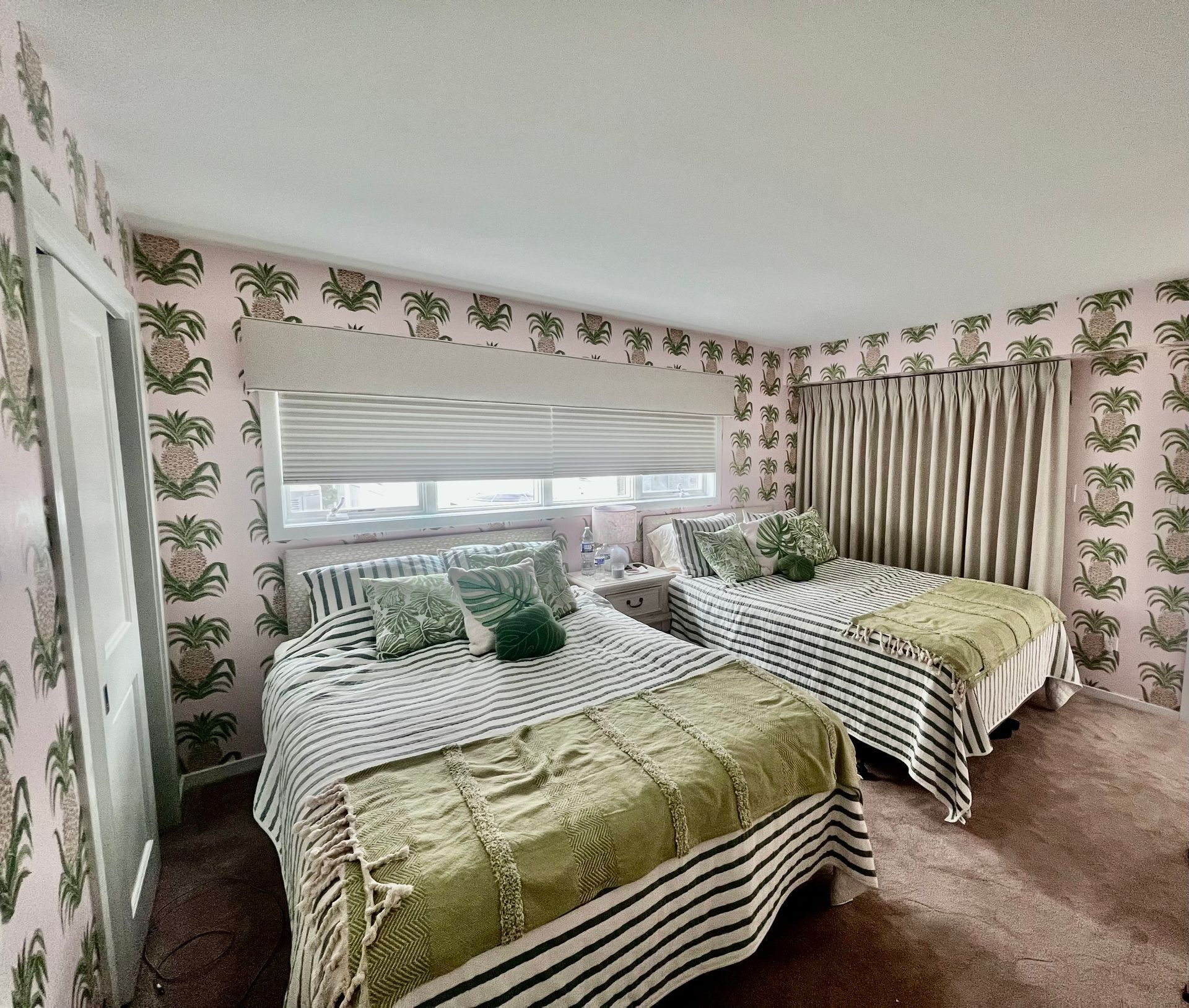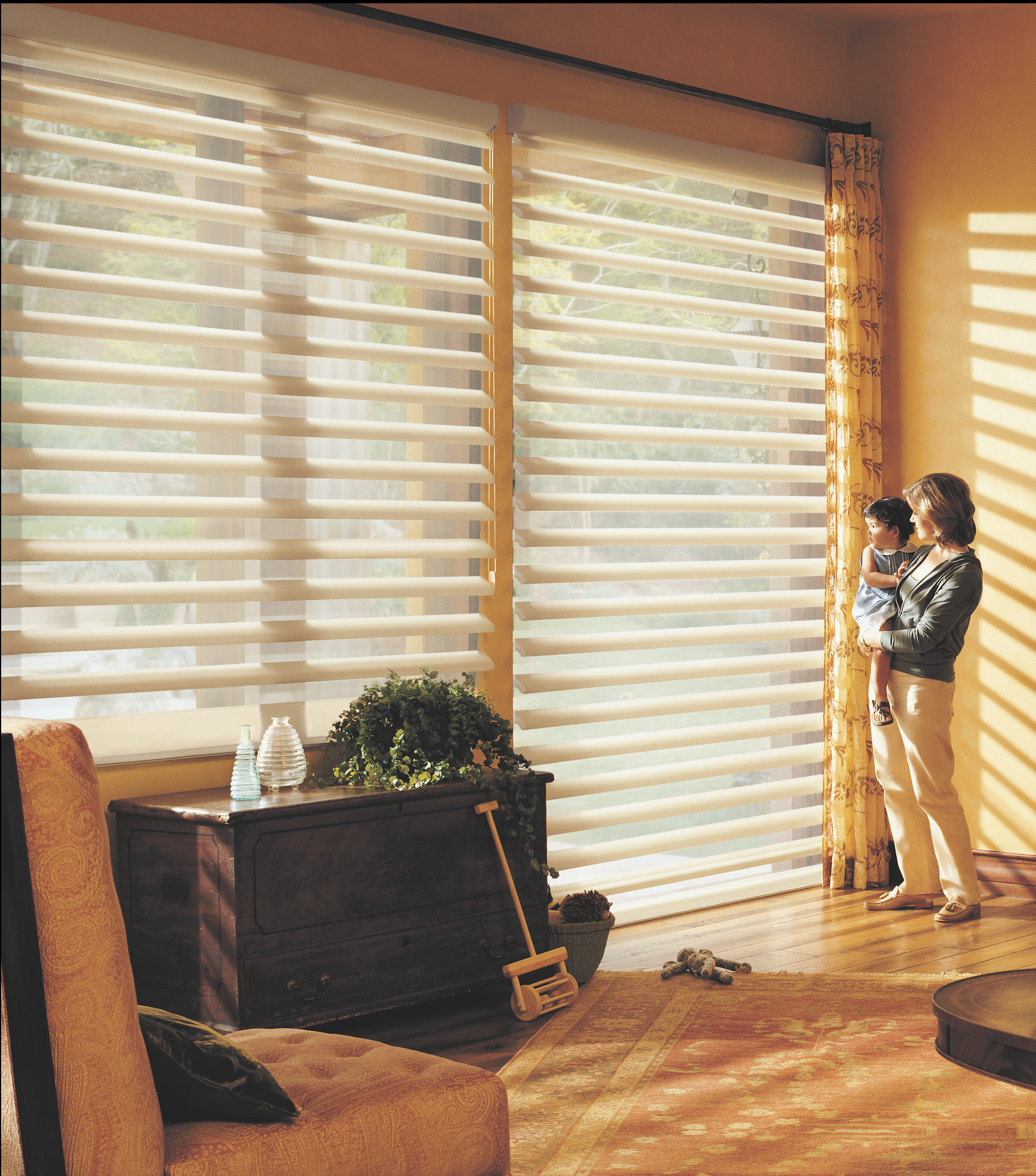
1. Smart & Motorized Window Treatments Become Standard
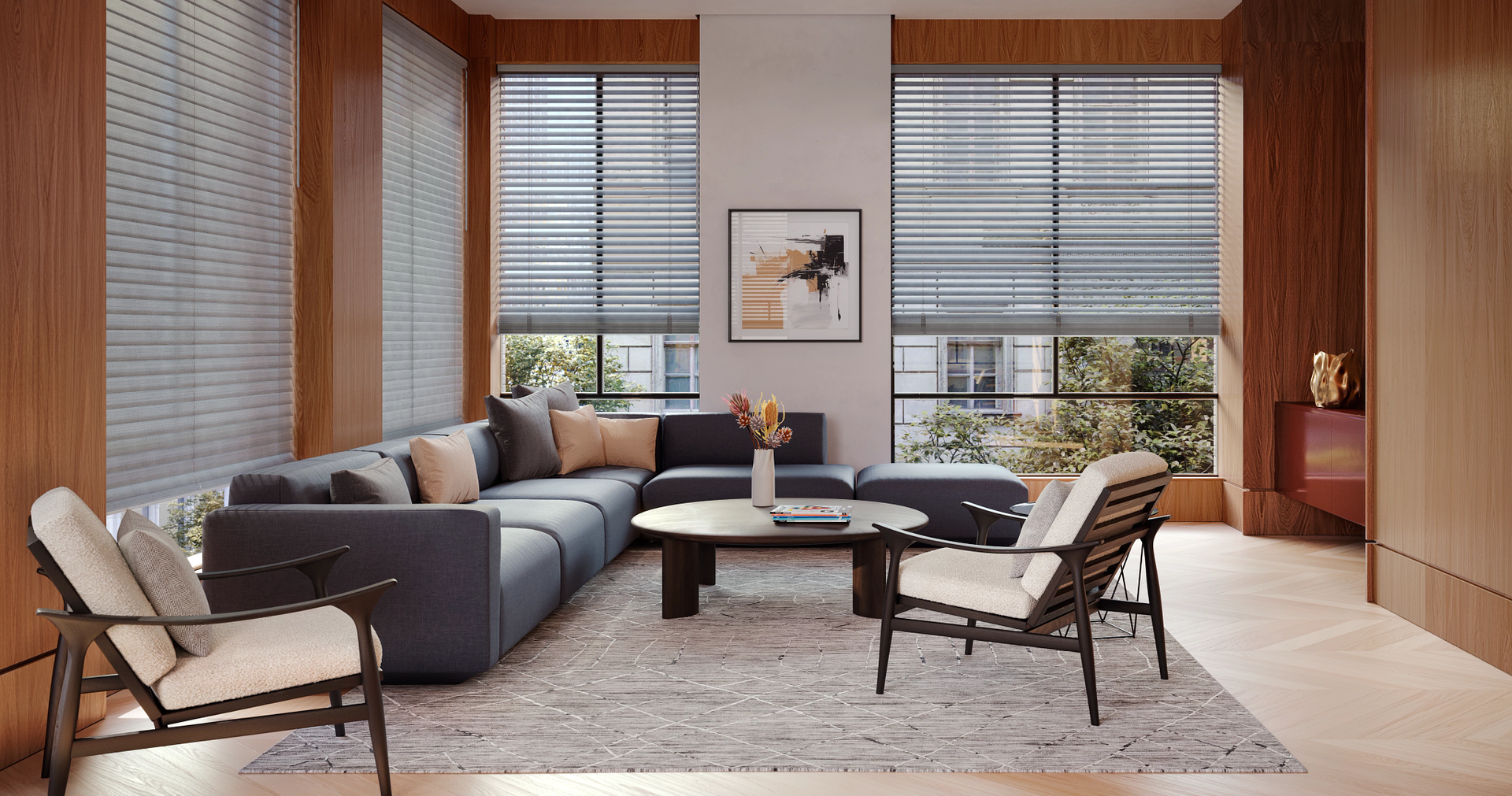
Motorization has crossed the adoption threshold. Homeowners increasingly expect app-based, remote, or voice-controlled operation—especially for large expanses of glass and hard-to-reach windows. Explore motorized window shades.
2. Layered Window Treatments for Control & Depth
Pairing shades with drapery delivers flexibility: filtered daylight during the day, privacy and insulation at night. See custom drapery options.
3. Natural Materials with a Refined Look
Woven woods and organic textures remain popular, but with tighter weaves and tailored edges that feel intentional rather than rustic. Browse woven wood shades.
4. Clean, Minimal Hardware
Slim profiles, concealed tracks, and understated finishes keep visual focus on the window itself, not the mechanics.
5. Warm Neutrals Replace Stark White
Soft beiges, taupes, and greige tones create a more livable, forgiving palette that complements modern interiors.
6. Statement Drapery in Select Spaces
Bold fabrics and fuller drapery are being reserved for rooms where visual impact matters—dining rooms, offices, and primary bedrooms.
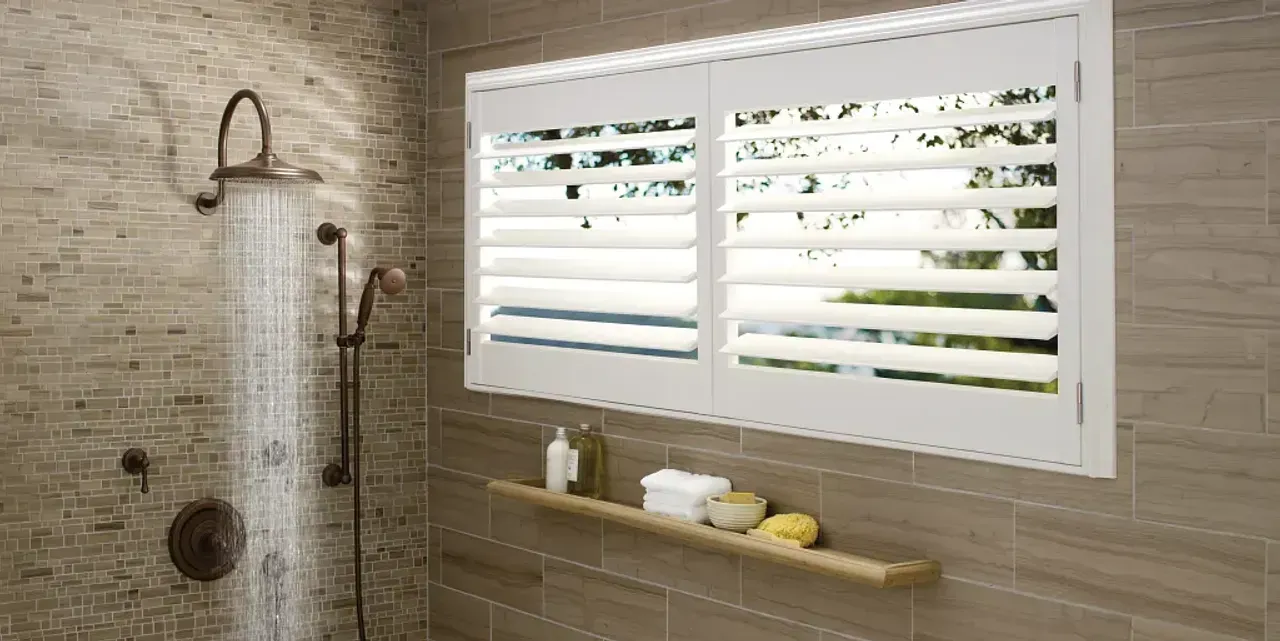
7. Energy-Efficient Fabrics Take Priority
Insulating linings, solar shades, and cellular designs continue to grow in demand as homeowners look to manage heat and glare. Learn about energy-efficient window treatments.
8. Targeted Blackout Solutions
Instead of whole-home blackout, homeowners are focusing on bedrooms, nurseries, and media rooms where light control truly matters. Compare blackout shades.
9. Floor-to-Ceiling Installations
Mounting treatments higher than the window frame visually raises ceiling height and adds architectural presence.
10. Custom Fit Over Stock Sizes
Precision matters. Custom-measured window treatments outperform off-the-shelf options in both appearance and longevity.
11. Subtle Patterns Over Loud Prints
Texture-driven fabrics and tonal designs are favored over high-contrast or heavily patterned materials.
12. Modern Roman Shades
Roman shades are trending again with flatter folds, cleaner tailoring, and contemporary fabric selections. Explore Roman shades.
13. Sustainable Material Choices
Homeowners are asking smarter questions about sourcing, durability, and environmental impact.
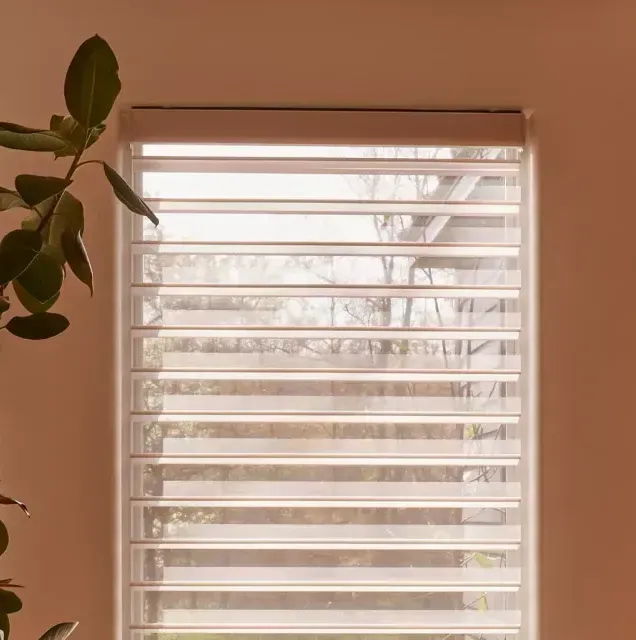
14. Dual & Zebra Shades for Day-to-Night Use
Layered roller designs allow users to shift from filtered light to privacy without changing treatments. See zebra shades.
15. Matte & Brushed Hardware Finishes
High-gloss metals are giving way to softer finishes that blend seamlessly into the room.
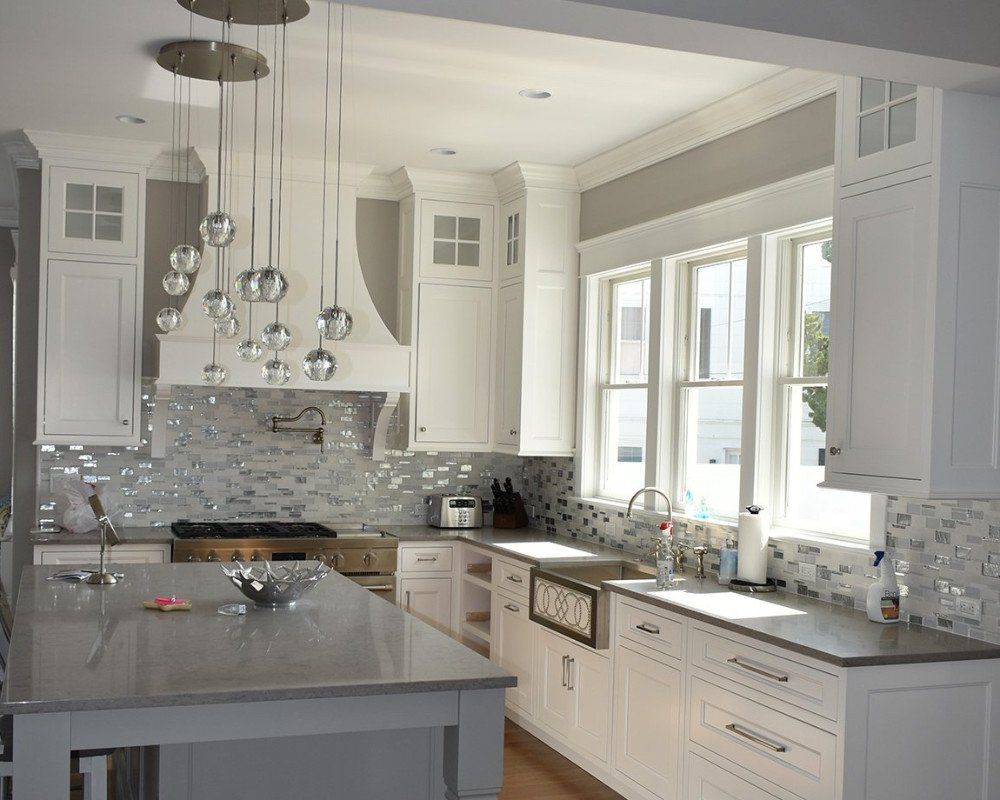
16. Window Treatments Planned Earlier in Design
In new builds and renovations, treatments are now being planned alongside lighting and millwork, not after construction.
17. Light-Filtering Fabrics Over Sheers
Homeowners prefer diffusion without full transparency, especially in open living areas.
18. Color-Matched Treatments
Shades and drapery are increasingly designed to match wall color or trim, creating a cohesive, architectural look.
19. Texture as the Lead Design Element
When color stays neutral, texture becomes the differentiator—linen weaves, dimensional fabrics, and soft movement.
20. Cordless Designs as the Default
Safety, simplicity, and clean sightlines are making cordless operation the standard across categories.
21. Tailored Valances & Cornices
Soft, structured valances are re-emerging as a way to frame windows without heavy drapery. Explore custom valances.
22. Indoor–Outdoor Design Continuity
Homes with patios or lanais are coordinating interior window treatments with exterior shading solutions.
23. Elevated Roller Shades
Custom colors, textures, and opacity levels are turning roller shades into a design-forward option. Browse roller shades.
24. Privacy-First Designs for Urban Homes
Top-down/bottom-up configurations allow light in while maintaining privacy—ideal for street-facing windows. Learn about top-down/bottom-up shades.
25. Longevity Over Short-Term Trends
Homeowners are prioritizing timeless designs and durable materials that will still perform and look relevant years from now.
What These 2025 Trends Mean for Homeowners
The clear shift is toward window treatments that function as part of the home’s infrastructure—not accessories. When chosen correctly, they improve comfort, reduce energy costs, protect privacy, and elevate daily living.
The strongest results come from solutions tailored to how each room is used, not from chasing trends alone.
Ready to Apply These Trends to Your Home?
The most effective next step is a personalized consultation that aligns current trends with your home’s architecture, light exposure, and lifestyle needs. From there, every decision becomes simpler—and every window starts working smarter.